


We are in a new stage as productive users. The pandemic has changed everything, and it’s time to renew or die. Today, I believe that both a freelancer and a server or a small and medium-sized enterprise (SME) need a Customer Relationship Management (CRM) system. If you’re not using one of these tools, stay because you’re about to see the incredible world of opportunities you’re missing out on.
And yes, you need a CRM tailored to your business. You might have been doing fine without one until now, but that doesn’t mean you don’t need it. It’s a tool that basically helps you sell more.
Contenidos
What is a CRM?
You can find thousands of texts discussing and defining a CRM, although its name gives you clues – “Customer Relationship Management“, or in other words, a tool for managing customers. But as I don’t like to generalise, I’ll tell you that it’s used to keep your potential customer base, active customers, leads, offers, and negotiations up to date.
Because these types of tools allow you to do things like:
- Keep a record of a customer’s purchases.
- Create recurring negotiations.
- Have notes and timelines for offers.
- Create tasks, reminders, and automations.
Imagine you sell baby products. Due to their nature, there are perishable products, right? Well, with a CRM, you can find out which customer is recurrent and automate emails or calls based on a product’s expiration date. If you sold baby milk, you can make sure that every month for a year, they receive an email or notification telling them that their product is about to run out and send them a new offer.
You can also segment customers or prospects, label them to work with them, or even prioritise hot areas. In short, an immense world of opportunities.
The Best CRMs
There are many options on the market, but I’ve wanted to talk about the three I know best and work with actively in some clients. These three tools have a particular feature, which is that they allow you to try them in free or limited-time mode.
The three chosen have been Holded, HubSpot, and one that I don’t see talked about much but is quite powerful, Bitrix24. I don’t want to go into the many options they offer, but rather my experience with each of them.
HubSpot
I must clarify that HubSpot is much more than just a simple CRM. It’s a complete marketing suite designed for automations and with an email system that surpasses the competition. I honestly think that the best thing the team behind this tool has done is its integration with thousands of services.
You can try it for free, and I insist, the integrations are essential in HubSpot. It falls short when compared to the other two CRMs since it’s more focused on digital marketing than a pure sales tool; for example, forget about keeping accounting, having a product catalogue to make offers, and many other options. Although its form management or ad management is excellent.
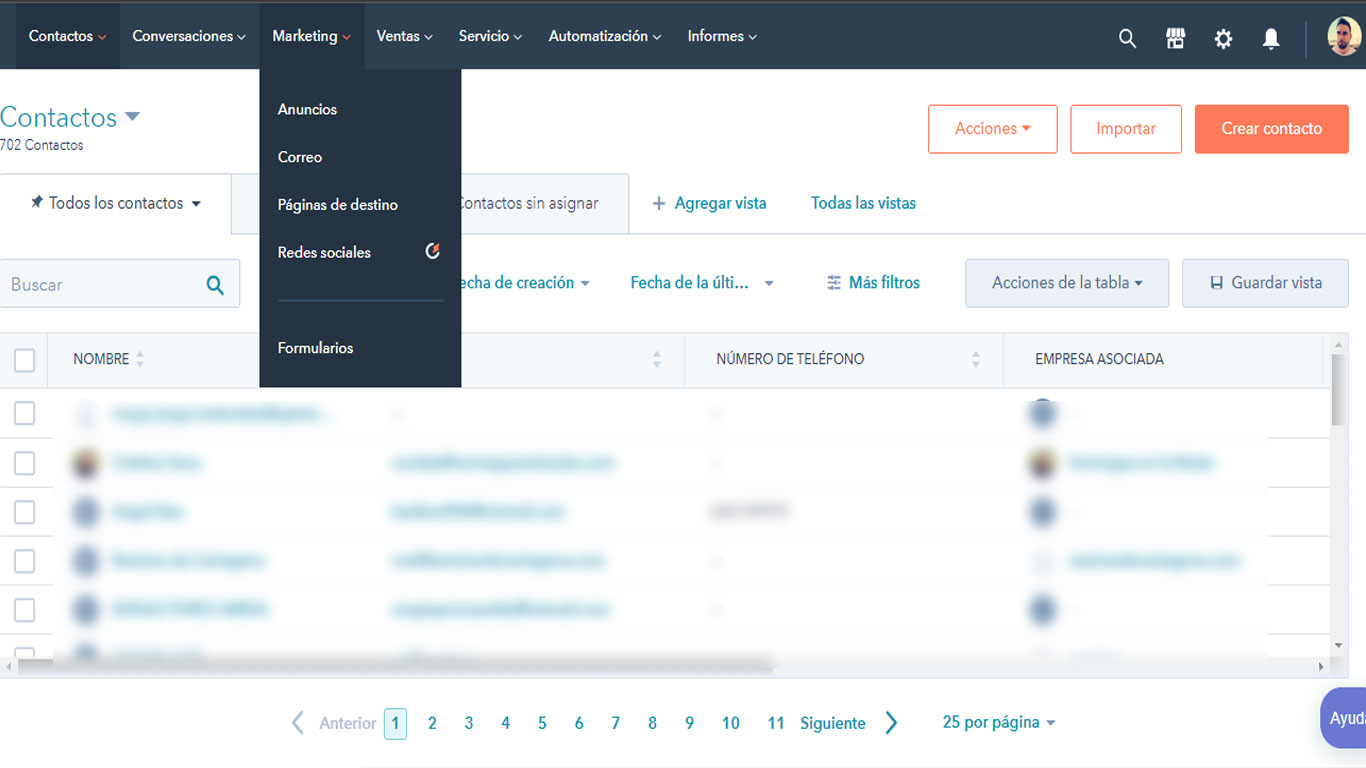
Screenshot of HubSpot.
But at the end of the day, it’s quite good for controlling leads. And as I said, you can integrate it with other tools like Mautic, Mailchimp, WordPress… and thousands more.
Holded
It’s positioning itself as one of the best options as a CRM for all types of profiles. It’s not as ambitious as giants like Salesforce, but it’s moving forward steadily. After trying it thoroughly, it’s true that it basically has everything you need and more. For example, you can synchronise sales with WooCommerce and perform thousands of marketing actions through Holded.
You can manage appointments, content, cash flows, and manage a catalogue to make in-situ offers with customers. The difference with HubSpot is its approach, more focused on in-person and online sales than just managing potential customers.
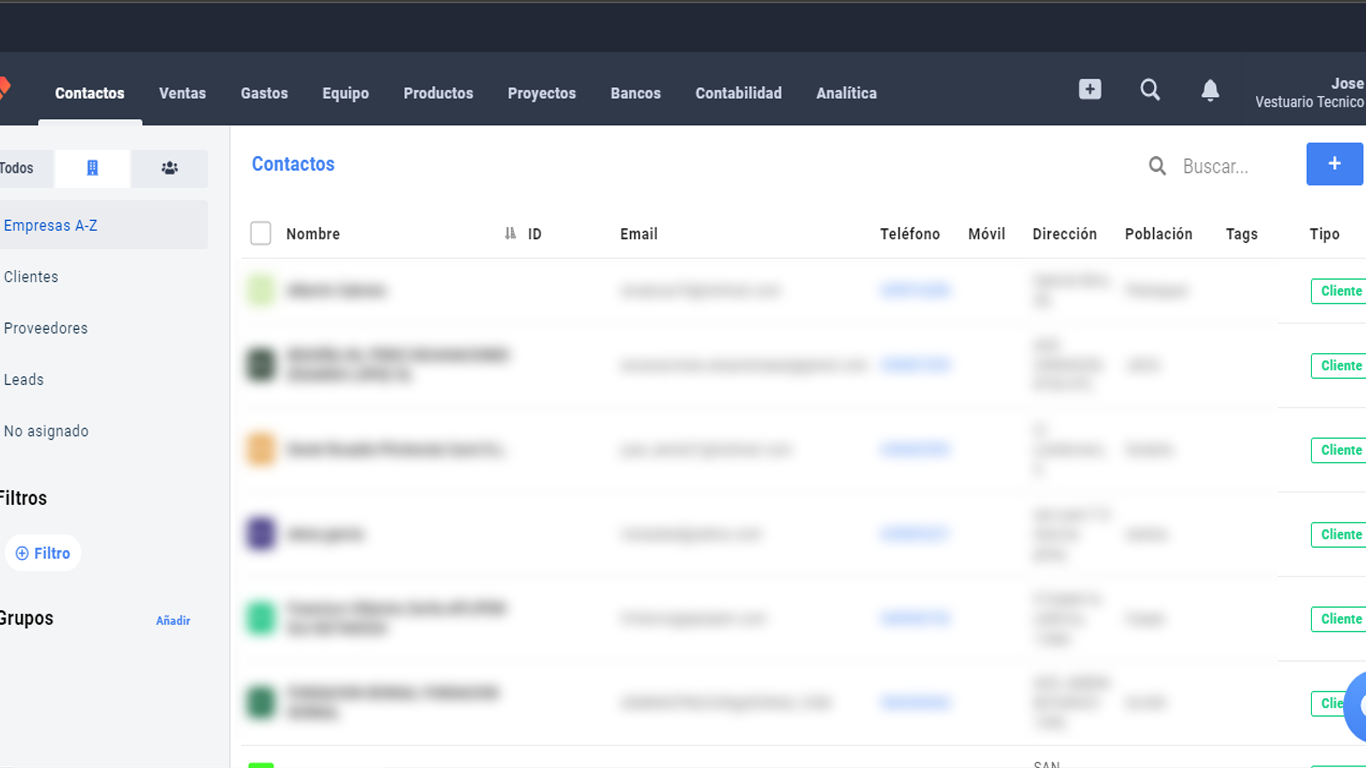
Screenshot of Holded.
What’s the downside? Well, it’s complicated to try it out well, as although you have a free version to test it, it’s too short on options and possibilities. You also need an adapted plan if you manage a high volume of sales invoices per year.
Bitrix24
It’s not talked about much, and I don’t quite understand why, about Bitrix. Among the three options, Bitrix is the one that offers the most and the best in its free model. On the other hand, it has fewer integrations with other services. Something I’ve missed is that there’s nothing that connects it with WordPress. However, it’s perhaps one of the most powerful options on the market.
Like Holded, it’s designed for traditional and online sales. It has almost all the options of its competitor, but the mobile application is much more practical and works better. Additionally, the possibility of making recurring offers saves commercial teams a lot of time.
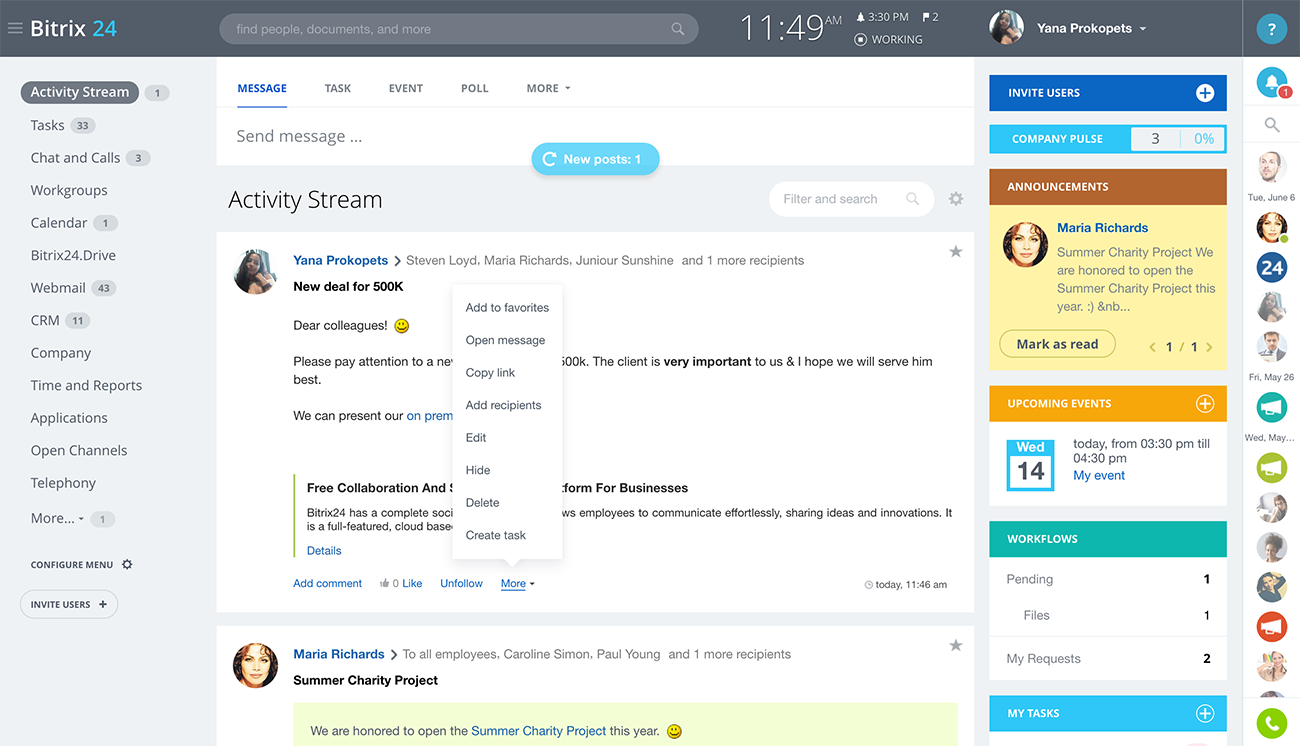
Bitrix24 allows you to create your own online store within the CRM and put it online. It’s the alternative they’ve created to connecting it with Prestashop or WooCommerce.
Which of the three is the best option?
Well, the answer is “It depends”. And it’s that while all the options share functions, each one specialises more than the other in certain fields. The ideal is always that a consultant analyses your business and implements the most suitable option for your needs.
But if you want, I can give you a quick summary:
- To manage leads and automate emails and interactions, HubSpot.
- If you need a CRM and Enterprise Resource Planning (ERP) with full integration in e-commerce, Holded.
- If you need a CRM with offer automation and good sales flow management, Bitrix24 is a very good option.
Do you want us to help you implement a CRM for your business? Fill out this form.